EIA-485 (also known as RS-485 with the formal title TIA/EIA-485-A) is a widely used network communication standard. Despite its popularity, we often misunderstand it. As we know, it primarily specifies generator and receiver characteristics within a digital multipoint system but we do not cover other aspects like signal quality. This makes it ideal for multi-master systems. Although the standard is relatively short, we can find additional guidance in TSB89.
EIA-485 networks generally use a daisy-chain topology with terminations at both ends, specific cables, and varying parameters for different devices. Data rates differ across devices, making it essential to understand the nuances of its implementation. In this blog, we explore the standard’s definition, network configuration, key components, and application suggestions.

Overview of the EIA-485 Standard
- Standard Definition: TIA/EIA-485-A defines only the physical layer, specifying the characteristics of generators and receivers within a digital multipoint system. It does not address aspects like signal quality or communication protocols.
- Network Topology: Typically follows a linear bus layout with daisy-chain connections. Although we do not recommend a star topology, we can use short stubs in specific cases. However, they should not be used in high-speed scenarios.
- Applicable Systems: Best suited for multi-master systems where devices can operate independently, with different power sources for each device.
Key Points in Network Deployment
- Manufacturer’s Responsibilities: Manufacturers should specify cabling, grounding, termination, fail-safe biasing, and connectors. They must also define the data rates and segment lengths for their products.
- Equipment Selection: Different chips for drivers, receivers, and transceivers offer various performance levels. Selection should be based on the application’s speed and environmental needs.
- Grounding Considerations: Proper grounding practices are crucial to prevent damage to transceivers from high common mode voltage differences due to uneven ground potentials. A three-wire ground is often needed.
- Protection Circuits: Although we can use protection circuits to reduce equipment failure, we must design them to maintain high data rates.
- Optical Isolation: Optically isolated EIA-485 can protect devices, but not the transceivers themselves. A shared common wire between transceivers is required for proper isolation.
- Repeater Selection: Repeater designs vary, so it is essential to use those recommended by the manufacturer, ensuring they suit the network’s protocol and data requirements.
Introduction to Key Components
- Termination: Terminating a data cable with a resistor matching its characteristic impedance minimizes reflections, reducing errors—especially vital in high-speed or long-distance applications.
- Fail-Safe Bias: EIA-485 systems can experience bus “floating” due to its multipoint nature. Biasing ensures a defined state for idle receivers, reducing errors.
- Connectors: Options include RJ-11, RJ-45, screw connectors, and DB9, each with unique advantages.
- Grounding: We recommend a three-wire system. And we should pay attention to the connection between logic ground and the third wire to avoid noise.
- Protection Circuits: Diode-based circuits can shield transceivers from common-mode voltages but may impact data rates.
- Repeaters: Useful for extending network segments, but require careful selection for compatibility with the protocol and data flow.
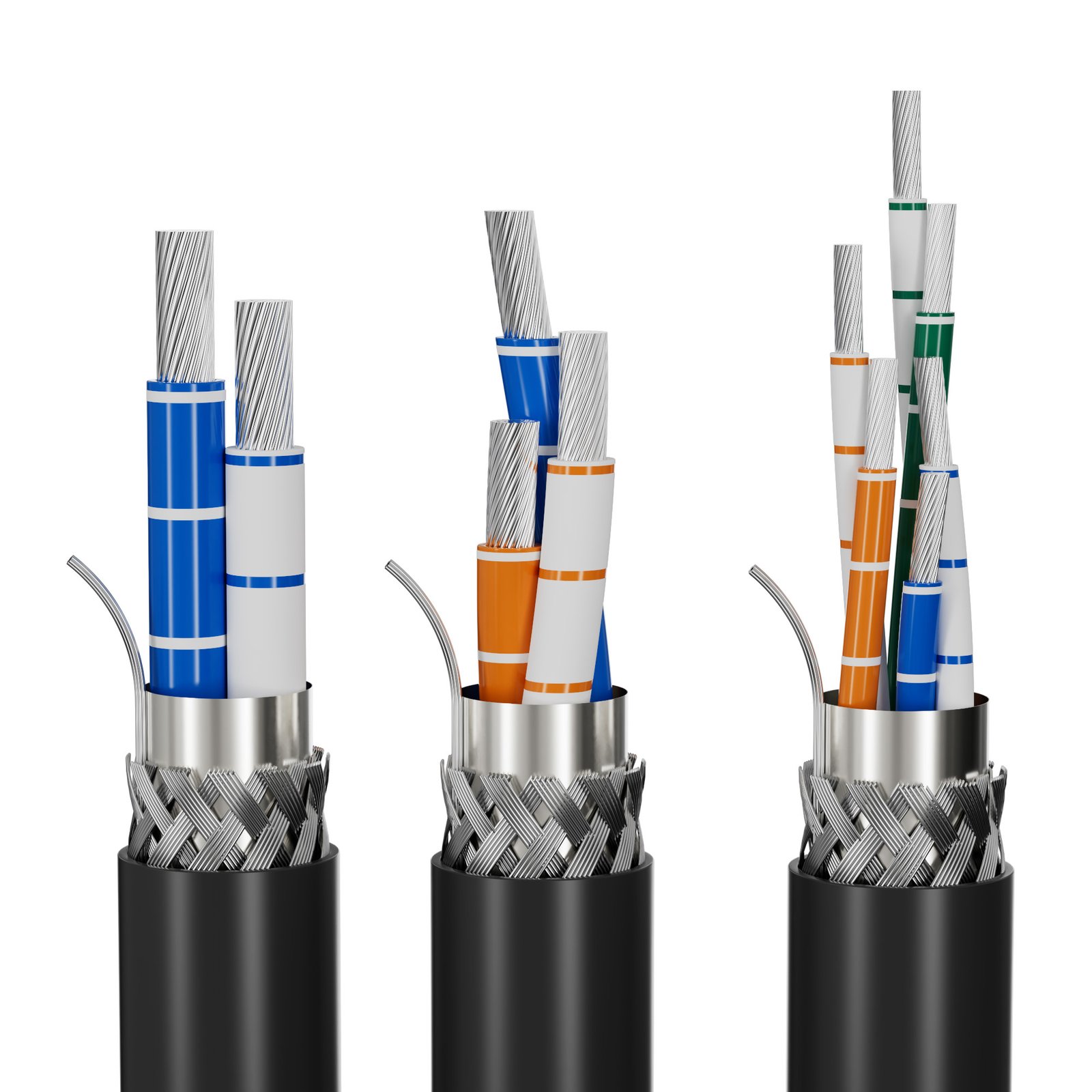
- Cabling: Selecting the right cable is essential, depending on data rate, distance, and environment. Poor cabling choices can lead to signal issues.
- Optically Isolated Transceivers: While they offer signal isolation, they cannot protect directly connected transceivers from electrical transients.
Application Scenario Suggestions
- Same Control Panel: Use DC-coupled EIA-485 with individual earth connections for grounding.
- Different Control Panels in the Same Building: Opt for optically-coupled EIA-485 with a separate reference ground wire.
- Different Buildings: Use fiber optics when possible for maximum isolation.
Understanding RS-485 for Multi-Device Networks
RS-485 is designed for serial communication, offering a higher data transfer rate and longer distance communication—up to 1200 meters in optimal conditions. It supports the connection of up to 32 devices simultaneously, making it a preferred choice for industrial automation and complex systems.
RS-485 Multi-Device Wiring:
RS-485 networks are typically arranged in a bus topology. Devices connect through two data lines (A and B) to a single bus, creating a network. Each device needs a unique address, allowing the master device to communicate with a selected unit.
Steps for RS-485 Multi-Device Connection:
- Prepare Devices: Ensure all devices support RS-485 communication.
- Connect Data Lines: Use two data lines (A and B) to link all devices in a bus configuration.
- Configure Addresses: Assign each device a unique address for precise communication.
- Use Termination Resistors: Place termination resistors at both ends of the bus to prevent signal reflection and ensure stability.
Key Tips:
- Proper Wiring: Ensure A lines connect to A and B lines to B across devices.
- Device Count: Avoid exceeding the maximum device limit; Modbus protocols allow up to 31 devices.
- Twisted Pair Cables: Recommended for long distances to maintain signal integrity.
- Check Address Settings: Correct addressing is crucial to avoid communication issues.
- Verify Termination Resistors: Place them only at the bus ends to avoid mid-line reflections.
Why Choose Syston Cable Technology
At Syston Cable Technology, we are a market leader in fieldbus cables, trusted by many wordwide system manufacturers. Our RS-485 cables are designed for long-distance reliability, featuring low capacitance and enhanced noise protection to prevent signal distortion. They perform well in harsh environments and offer improved safety in case of fire.
Moreover, our high-quality RS-485 cables support automation systems like Modbus, Etherbus, BACnet MS/TP, CANopen, and DMX512, ensuring optimal performance even under challenging conditions. Whether you need solutions for industrial automation or large-scale access control, our products deliver durability and reliability.
Have more questions? Feel free to reach out! Our experts are ready to help you find the perfect cable solution. Visit our website, check out our YouTube channel, or contact us directly for more information.